

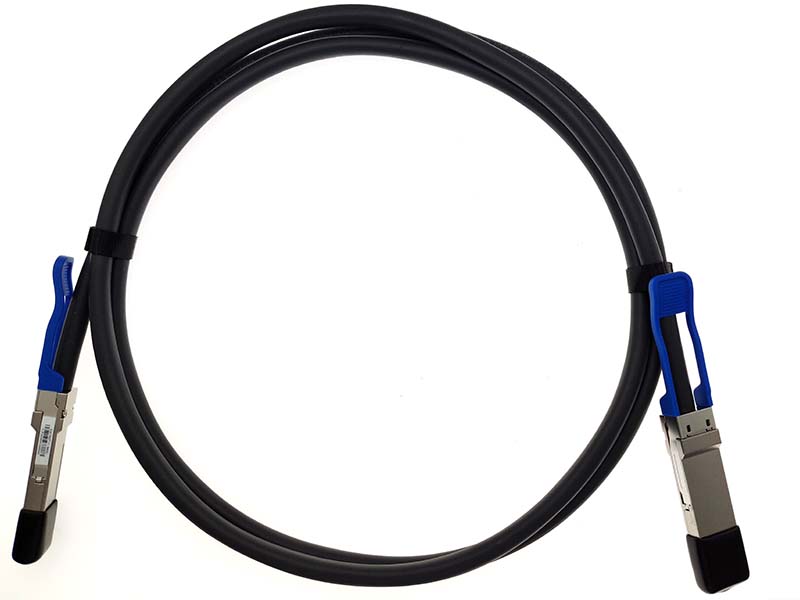
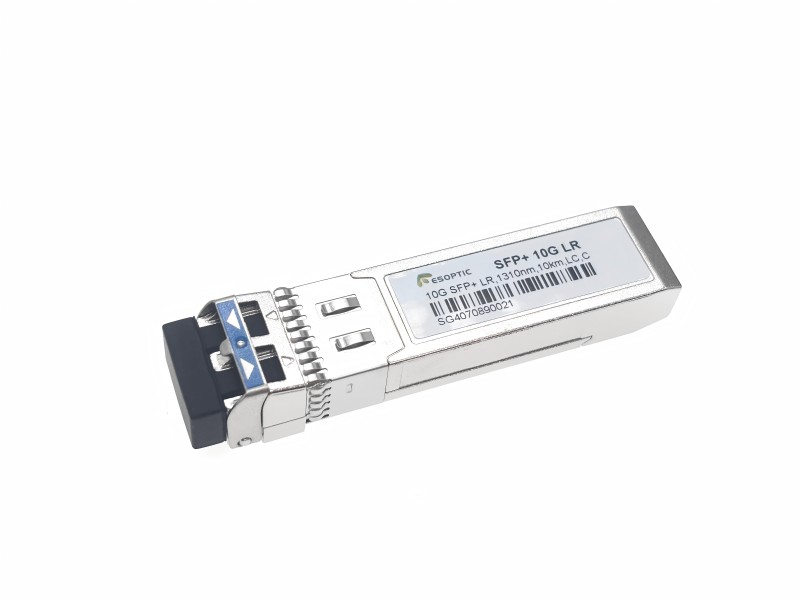
As optical modules move toward higher data rates and tighter form factors, packaging technology is becoming just as critical as optical design itself. Among the most discussed approaches today are COB & COC. Although often mentioned together, COB & COC represent two distinct technical paths, each solving integration challenges in different ways.
At ESOPTIC, both COB & COC are treated as practical engineering tools rather than marketing concepts, carefully selected based on performance targets, cost structure, and manufacturing maturity.
COB Technology in Optical Modules
COB (Chip on Board) refers to mounting bare semiconductor dies directly onto the module substrate or PCB. In optical modules, COB is commonly used for laser drivers, TIAs, and in some cases, integrated optical engines.
The core advantage of COB lies in its electrical simplicity. By eliminating traditional chip packaging, COB shortens interconnect paths, reduces parasitic capacitance and inductance, and improves high-speed signal integrity. This becomes increasingly important as optical modules scale to 400G and 800G.
From a thermal perspective, COB also enables more direct heat dissipation paths. With proper substrate design and thermal interfaces, COB supports higher power densities without compromising long-term reliability.
However, COB places higher demands on manufacturing precision. Bare-die handling, underfill control, and rework limitations mean that COB is best suited for mature designs and well-controlled production environments, an area where ESOPTIC continues to invest heavily.
COC Technology in Optical Modules
COC (Chip on Carrier) follows a different integration philosophy. Instead of attaching bare dies directly to the main board, chips are first assembled onto a dedicated carrier, which is then mounted into the optical module.
This intermediate carrier provides several practical advantages. COC allows for better pre-testing, easier replacement, and more stable assembly processes. For optical module manufacturers, COC often delivers higher yields during early-stage production or when introducing new chipsets.
In high-speed applications, COC still offers strong electrical performance, especially when carrier design is optimized for impedance control and thermal spreading. While signal paths may be slightly longer than in pure COB solutions, the difference is often offset by improved manufacturability and scalability.
At ESOPTIC, COC is widely used in platforms where flexibility, fast iteration, and risk control are critical design priorities.
Choosing Between COB and COC
Rather than competing directly, COB & COC address different stages and needs within optical module development:
COB prioritizes maximum integration and electrical performance
COC emphasizes process stability and production efficiency
In real-world deployments, COB & COC may coexist within the same product family, enabling suppliers like ESOPTIC to balance performance and manufacturability across multiple market segments.
COB & COC in Next-Generation Optical Modules
As optical communication moves toward 800G and beyond, COB & COC will continue to play essential roles. Whether supporting compact pluggable modules or future optical engines, COB & COC remain foundational technologies rather than temporary solutions.
FAQ: COB & COC Packaging
Q1: Is COB always better for high-speed optical modules?
Not always. While COB offers excellent signal integrity, COC may be more suitable depending on production scale and design maturity.
Q2: Does COC limit data rate performance?
No. With proper carrier design, COC can fully support 400G and 800G optical modules.
Q3: Are COB & COC compatible with mass production?
Yes. Both COB & COC are already used in volume manufacturing at ESOPTIC.
Q4: Which technology is more cost-effective?
Cost depends on yield, volume, and lifecycle stage. COB & COC each offer advantages in different scenarios.
Q5: Does ESOPTIC provide COB & COC-based optical modules?
Yes. ESOPTIC supports optical module solutions based on both COB & COC, tailored to customer requirements.
