

High-density Trunk Cable: Simplifying High-Speed Fiber Infrastructure for Modern Data Centers
Introduction
As data center architectures continue evolving toward higher bandwidth, greater port density, and faster deployment cycles, cabling systems are under increasing pressure to deliver scalability without adding complexity. Among the various fiber connectivity solutions available today, High-density Trunk Cable has emerged as a preferred choice for structured fiber cabling in hyperscale data centers, cloud environments, and enterprise networks.
A well-designed High-density Trunk Cable solution reduces installation time, optimizes cable management, and supports seamless migration to 100G, 400G, 800G, and future high-speed optical networks.
At ESOPTIC, we provide high-performance High-density Trunk Cable assemblies engineered to maximize fiber density while maintaining exceptional optical performance and deployment flexibility.
What Is a High-density Trunk Cable?
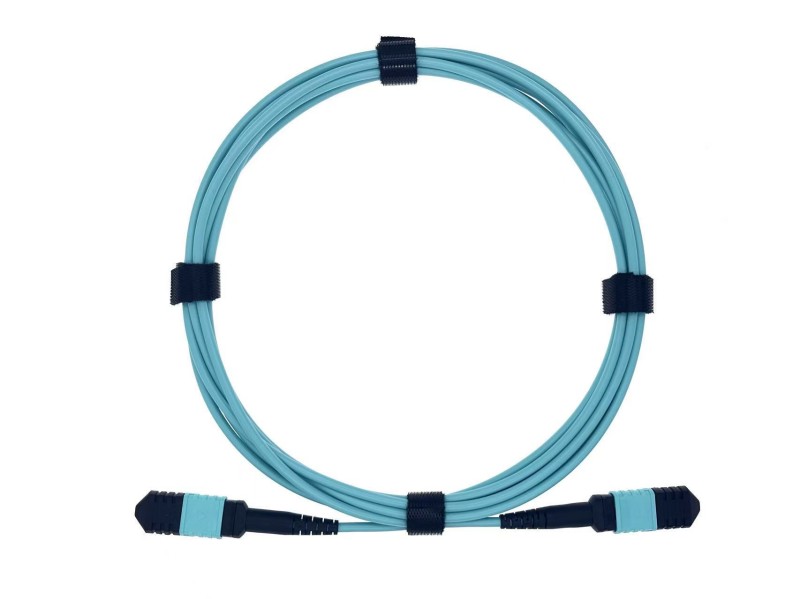
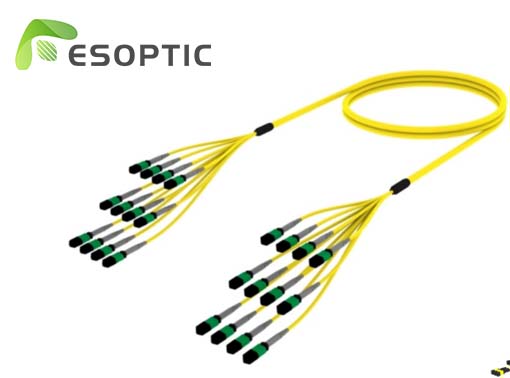
A High-density Trunk Cable is a factory-terminated multi-fiber cable assembly designed to connect high-density patch panels, fiber distribution units, and network equipment through a plug-and-play architecture.
Unlike traditional field-terminated fiber installations, a High-density Trunk Cable arrives pre-tested and ready for deployment. It typically incorporates high-fiber-count connectors such as MPO or MTP® interfaces, enabling dozens or even hundreds of fibers to be installed through a single cable assembly.
This approach significantly reduces installation complexity while improving network consistency and reliability.
Typical Components
· MPO&MTP® connectors
· High-fiber-count backbone cable
· Pulling eye (optional)
· LSZH, OFNR, or OFNP jacket options
· Factory-tested insertion loss performance
Why High-density Trunk Cable Matters
The transition toward AI clusters, cloud computing, and high-performance computing has dramatically increased fiber requirements inside modern facilities.
A High-density Trunk Cable helps network operators address several key challenges:
Increased Fiber Density
Modern switches can support hundreds of optical connections within a single rack. A High-density Trunk Cable allows more fibers to occupy less physical space, making it ideal for high-density environments.
Faster Deployment
Because every High-density Trunk Cable is factory-terminated and factory-tested, installation teams can significantly reduce on-site labor and testing requirements.
Improved Cable Management
Organized routing minimizes congestion within pathways and cabinets, improving airflow and simplifying maintenance activities.
Future-Proof Scalability
A properly designed High-density Trunk Cable infrastructure supports seamless migration from 10G and 40G networks to 100G, 400G, and even 800G optical systems.
Key Features of ESOPTIC High-density Trunk Cable Solutions
Precision Factory Termination
Every ESOPTIC High-density Trunk Cable undergoes rigorous factory inspection and testing to ensure low insertion loss and high optical reliability.
Flexible Fiber Counts
Available configurations include:
· 12 Fiber
· 24 Fiber
· 48 Fiber
· 72 Fiber
· 96 Fiber
· 144 Fiber and above
Multiple Connector Options
ESOPTIC supports:
· MPO-8
· MPO-12
· MPO-16
These options provide compatibility with a wide range of transceiver architectures and structured cabling designs.
Space-Saving Design
The compact structure of a High-density Trunk Cable enables efficient routing through trays, ducts, and rack systems while minimizing pathway utilization.
High Reliability
Premium fiber materials and strict manufacturing standards ensure stable performance in mission-critical environments.
Common Applications of High-density Trunk Cable
Hyperscale Data Centers
Large-scale cloud facilities rely on High-density Trunk Cable assemblies to simplify backbone fiber deployment between network zones.
AI and HPC Networks
GPU clusters and high-performance computing environments require massive bandwidth and low-latency interconnections that benefit from high-density fiber infrastructure.
Enterprise Data Centers
Organizations upgrading to 100G or 400G Ethernet can deploy High-density Trunk Cable solutions to support future expansion.
Telecommunications Networks
Service providers use High-density Trunk Cable systems for central offices, edge facilities, and fiber distribution networks.
High-density Trunk Cable vs Traditional Fiber Cabling
Feature | High-density Trunk Cable | Traditional Fiber Cabling |
Installation Speed | Fast | Slower |
Factory Testing | Yes | Often No |
Fiber Density | Very High | Moderate |
Space Utilization | Excellent | Average |
Scalability | Excellent | Limited |
Maintenance | Easier | More Complex |
For modern data centers pursuing operational efficiency, High-density Trunk Cable solutions offer clear advantages over traditional fiber deployment methods.
Conclusion
As network speeds continue increasing and rack densities reach new levels, fiber infrastructure must become smarter, cleaner, and easier to scale. A well-designed High-density Trunk Cable provides the foundation for efficient high-speed connectivity while reducing deployment complexity and operational costs.
With advanced manufacturing capabilities and strict quality control, ESOPTIC delivers High-density Trunk Cable solutions that help data centers, telecom operators, and enterprise networks build future-ready optical infrastructure.
Whether supporting 100G, 400G, or next-generation 800G deployments, ESOPTIC is committed to providing reliable, high-density fiber connectivity for the evolving digital world.
FAQ
1. What is the primary benefit of a High-density Trunk Cable?
The primary advantage is maximizing fiber density while reducing installation time and cable management complexity.
2. Which connector types are commonly used in High-density Trunk Cable assemblies?
MPO and MTP® connectors are the most common choices due to their ability to support multiple fibers in a compact footprint.
3. Can High-density Trunk Cable support 400G and 800G networks?
Yes. High-density Trunk Cable solutions are widely used in 400G and emerging 800G optical network architectures.
4. Are ESOPTIC High-density Trunk Cables factory tested?
Yes. Every ESOPTIC High-density Trunk Cable is factory terminated and tested to ensure consistent optical performance.
5. Where are High-density Trunk Cables typically deployed?
They are commonly used in hyperscale data centers, cloud facilities, AI clusters, enterprise networks, and telecommunications infrastructure.
