

Flat-top, OSFP-RHS & Finned Top: Key Design Innovations Driving Next-Generation Optical Modules

As AI clusters, cloud computing infrastructures, and hyperscale data centers continue to scale, the demand for higher bandwidth and greater power efficiency is reshaping optical module design. While transmission speed often captures the spotlight, structural innovations such as Flat-top, OSFP-RHS, and Finned top have become equally important in ensuring thermal performance, deployment flexibility, and long-term reliability.
At ESOPTIC, we recognize that advanced optical connectivity is not only about optics and electronics—it is also about mechanical engineering. Features like Flat-top, OSFP-RHS, and Finned top are helping next-generation optical modules meet the challenges of 400G, 800G, and future 1.6T networks.
Understanding Flat-top Design
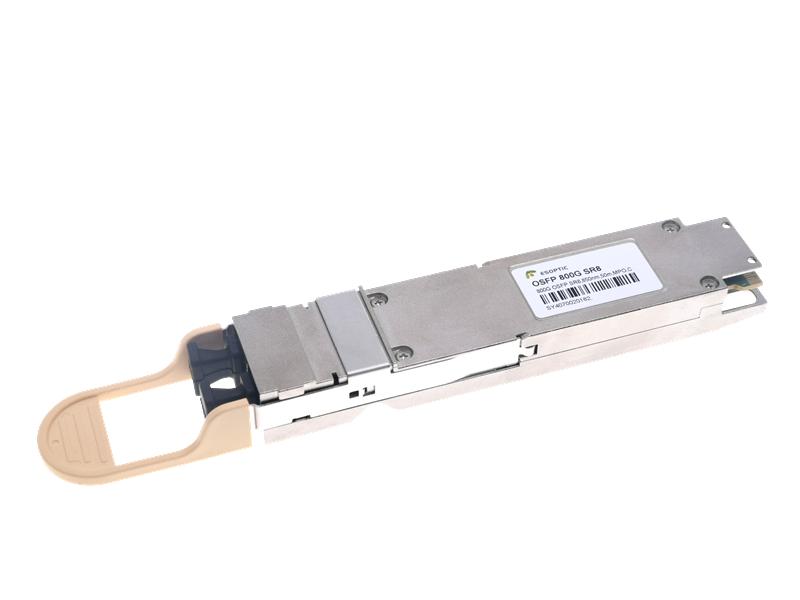
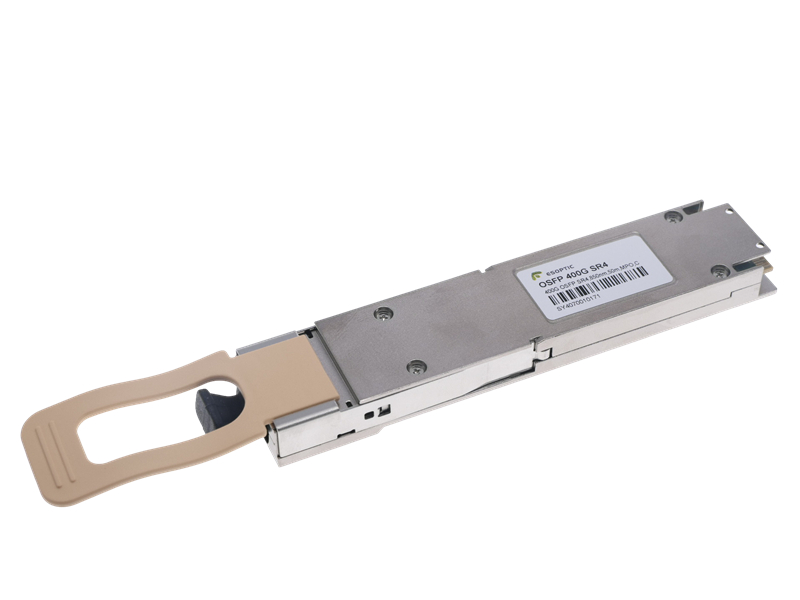
The Flat-top structure refers to an optical module housing with a smooth and uniform upper surface. Compared with conventional designs, Flat-top modules provide a more consistent thermal interface between the transceiver and the heatsink.
The benefits of Flat-top include:
· Improved contact with thermal solutions
· Enhanced heat transfer efficiency
· Better mechanical stability
· Simplified integration in high-density systems
As power consumption increases in modern networking equipment, Flat-top designs help maintain operating temperatures within optimal ranges, contributing to greater reliability and longer service life.
Why OSFP-RHS Matters
OSFP-RHS stands for Right-Hand Side orientation in OSFP module configurations. Although it may appear to be a minor mechanical variation, OSFP-RHS can significantly influence cable routing and airflow management within dense data center environments.
Key advantages of OSFP-RHS include:
· Cleaner cable organization
· Improved rack accessibility
· Better airflow optimization
· Simplified maintenance procedures
For large-scale deployments where thousands of optical links are installed, OSFP-RHS provides practical benefits that can reduce operational complexity and improve overall infrastructure efficiency.
The Role of Finned Top in Thermal Management
As optical modules move toward 800G and beyond, thermal management becomes increasingly critical. This is where the Finned top design delivers substantial value.
A Finned top module incorporates integrated cooling fins on the upper surface, increasing the available area for heat dissipation.
Benefits of Finned top technology include:
·
· Greater thermal dissipation capability
· Lower module operating temperatures
· Improved performance stability
· Enhanced reliability in demanding environments
For AI training clusters and high-performance computing networks, Finned top solutions help prevent thermal bottlenecks and support continuous operation under heavy workloads.
How Flat-top, OSFP-RHS, and Finned Top Work Together
Rather than functioning independently, Flat-top, OSFP-RHS, and Finned top address different aspects of optical module performance.
· Flat-top improves thermal interface efficiency.
· OSFP-RHS enhances deployment flexibility and cable management.
· Finned top strengthens cooling performance.
Together, Flat-top, OSFP-RHS, and Finned top create a balanced solution that supports higher speeds, improved thermal control, and easier system integration.
This combination is becoming increasingly important as network operators deploy 400G, 800G, and future-generation optical infrastructures.
ESOPTIC's Approach to Advanced Optical Module Design
At ESOPTIC, engineering innovation extends beyond transmission technology. Our optical solutions are developed with practical deployment requirements in mind, integrating advanced design features such as Flat-top, OSFP-RHS, and
Finned top where appropriate.
By combining optical performance, thermal optimization, and mechanical reliability, ESOPTIC helps customers build scalable and future-ready network infrastructures capable of supporting AI, cloud computing, and next-generation data center applications.
Conclusion
As network speeds continue to rise, successful optical module design depends on more than just optics. Flat-top, OSFP-RHS, and Finned top have emerged as critical structural innovations that improve cooling efficiency, deployment flexibility, and operational reliability.
For organizations planning the transition to higher-density networks, understanding the value of Flat-top, OSFP-RHS, and Finned top can provide a significant advantage in achieving stable, efficient, and scalable optical connectivity.
FAQ
1. What is a Flat-top optical module?
A Flat-top optical module features a smooth upper housing surface designed to improve thermal contact with heatsinks and enhance heat dissipation efficiency.
2. What does OSFP-RHS mean?
OSFP-RHS refers to an OSFP module configuratio with a right-hand-side connector orientation, helping optimize cable routing and airflow management.
3. Why is Finned top important for high-speed optical modules?
Finned top structures increase surface area for cooling, allowing modules to dissipate heat more effectively and maintain stable performance.
4. Are Flat-top, OSFP-RHS, and Finned top suitable for 800G applications?
Yes. Flat-top, OSFP-RHS, and Finned top designs are widely adopted in 800G environments where thermal performance and deployment efficiency are critical.
5. How does ESOPTIC utilize these technologies?
ESOPTIC integrates Flat-top, OSFP-RHS, and Finned top design concepts into selected optical solutions to improve reliability, thermal management, and system integration.
